Lab-engineered and plant-based hair extensions are rapidly emerging as the beauty industry’s next major innovation—promising to deliver realism, sustainability, and safety in a space long dominated by human and petroleum-based...

Image from Rebundle
Lab-engineered and plant-based hair extensions are rapidly emerging as the beauty industry’s next major innovation—promising to deliver realism, sustainability, and safety in a space long dominated by human and petroleum-based synthetic hair. But the central question remains: does this new wave of bioengineered hair truly outperform what’s already on the market, or is it simply an expensive experiment still years from proving its worth?
Across the globe, several companies are racing to redefine what hair extensions can be. Ruka, a London-based beauty tech brand, developed its Synths 2 line, a collagen-infused lab-grown fiber designed to mimic the texture and responsiveness of human hair while maintaining hypoallergenic and biodegradable properties. Meanwhile, Aja Labs—through its Nourie™ fiber—has focused on creating plant-derived materials enhanced with scalp-nourishing compounds, claiming to blend biotechnology with wellness.
In North America, Rebundle and LAB by Lillian Augusta have taken a more eco-conscious approach, creating biodegradable braiding hair from banana stems and other renewable plant fibers to reduce the harmful effects of plastic-based synthetics. The Canerow Company has joined the movement as well, introducing lightweight, plant-based alternatives that promise less scalp irritation and a smaller environmental footprint.
The appeal of these products lies not just in innovation, but in addressing long-standing pain points: allergic reactions, chemical exposure, and the unsustainable sourcing of traditional extensions. Yet, as interest grows, the lack of standardized testing and limited consumer data raise valid concerns. Are these materials as durable, versatile, and cost-effective as manufacturers claim—or are they still in the early stages of development, waiting for widespread validation?
The push toward lab-grown and plant-based hair didn’t emerge in a vacuum—it’s a response to growing evidence of toxicity in conventional synthetic hair. A Consumer Reports investigation found that 9 out of 10 popular synthetic braiding hair brands contained detectable levels of lead, and 3 included benzene, a known carcinogen. When heated during installation—a common practice—these plastics released volatile organic compounds (VOCs) such as acetone and formaldehyde, exposing wearers and stylists to potentially harmful fumes.
The Harvard T.H. Chan School of Public Health has also noted the lack of regulatory clarity: synthetic hair is neither fully classified as a cosmetic nor a textile, meaning it escapes the rigorous safety standards applied to either category. This regulatory “blind spot” has led many innovators to seek safer materials and more transparent supply chains.
In response, companies like Rebundle, and LAB by Lillian Augusta market their fibers as non-toxic, hypoallergenic, and biodegradable. Aja Labs’ Nourie™ and Ruka’s Synths 2 are specifically engineered to reduce exposure to heavy metals and VOCs by eliminating petroleum derivatives and using cleaner manufacturing processes.
Still, the industry remains young. Independent, peer-reviewed safety testing under real-world styling conditions—especially involving heat and chemical treatments—remains scarce. While early reports are encouraging, the absence of standardized data means that “safer” remains a marketing claim, not yet a scientifically established fact.
Consumers seeking peace of mind should weigh potential benefits against the realities: lab-grown and plant-based hair may reduce chemical exposure, but installation methods (tight braiding, adhesives, and heat) still pose mechanical risks to the scalp and follicles.
Lab-grown alternatives claim to offer a safer, non-chemical option. Because the fiber doesn’t require harsh processing or formaldehyde exposure, it may reduce contact with potential carcinogens. However, dermatologists caution that “lab-grown” doesn’t automatically mean “non-toxic.” Dr. Crystal Aguh, a dermatologist at Johns Hopkins, notes that scalp irritation often comes from adhesives or glues used to apply wigs, not the fibers themselves. Consumers still need to pay attention to how these products are installed and maintained.
LAB by Lillian Augusta Beauty offers hypoallergenic, lightweight, and vegan braiding hair. Their products are designed to be free from harmful chemicals, providing a safer alternative for individuals with sensitive scalps. Visit: LAB : Lillian Augusta Beauty
The Canerow Company produces braiding hair made from 100% banana plant fiber. This UK-based brand emphasizes a clean, breathable, and plant-based alternative to synthetic extensions. Visit: The Canerow Company
Rebundle is a Black-owned company that repurposes discarded banana stems to create biodegradable, non-toxic hair extensions. Their products are designed to be lightweight and comfortable, offering an eco-friendly option for consumers. Visit: Rebundle®
Lab-Grown hair companies are leading this evolution with materials designed to mimic human keratin structure while remaining sustainable and non-toxic. Ruka’s collagen-infused Synths 2, for instance, seeks to replicate the softness and flexibility of human hair by incorporating peptides that give the strands a smoother, more realistic finish. Meanwhile, Aja Labs’ Nourie™ fiber integrates scalp-friendly, plant-derived compounds meant to nourish rather than irritate the skin—a common complaint among users of petroleum-based synthetics.
On the plant-based side, Rebundle and The Canerow Company utilize banana fiber and other renewable resources to create extensions that are lightweight, breathable, and biodegradable. Their approach prioritizes comfort and sustainability over pure mimicry, trading the exact density of human hair for a cleaner, irritation-free experience. LAB by Lillian Augusta highlight hypoallergenic properties and reduced waste, emphasizing that modern consumers want products that feel as good ethically as they do physically.
However, the science is still catching up to the promise. While lab-grown and bio-fiber hair offers an impressive tactile experience—silky to the touch, less prone to tangling, and easier on sensitive scalps—it doesn’t yet fully match the weight, density, or heat responsiveness of high-quality human hair. Some early adopters have noted that while the appearance is nearly indistinguishable, the lighter feel can affect how the hair moves and blends with natural textures.
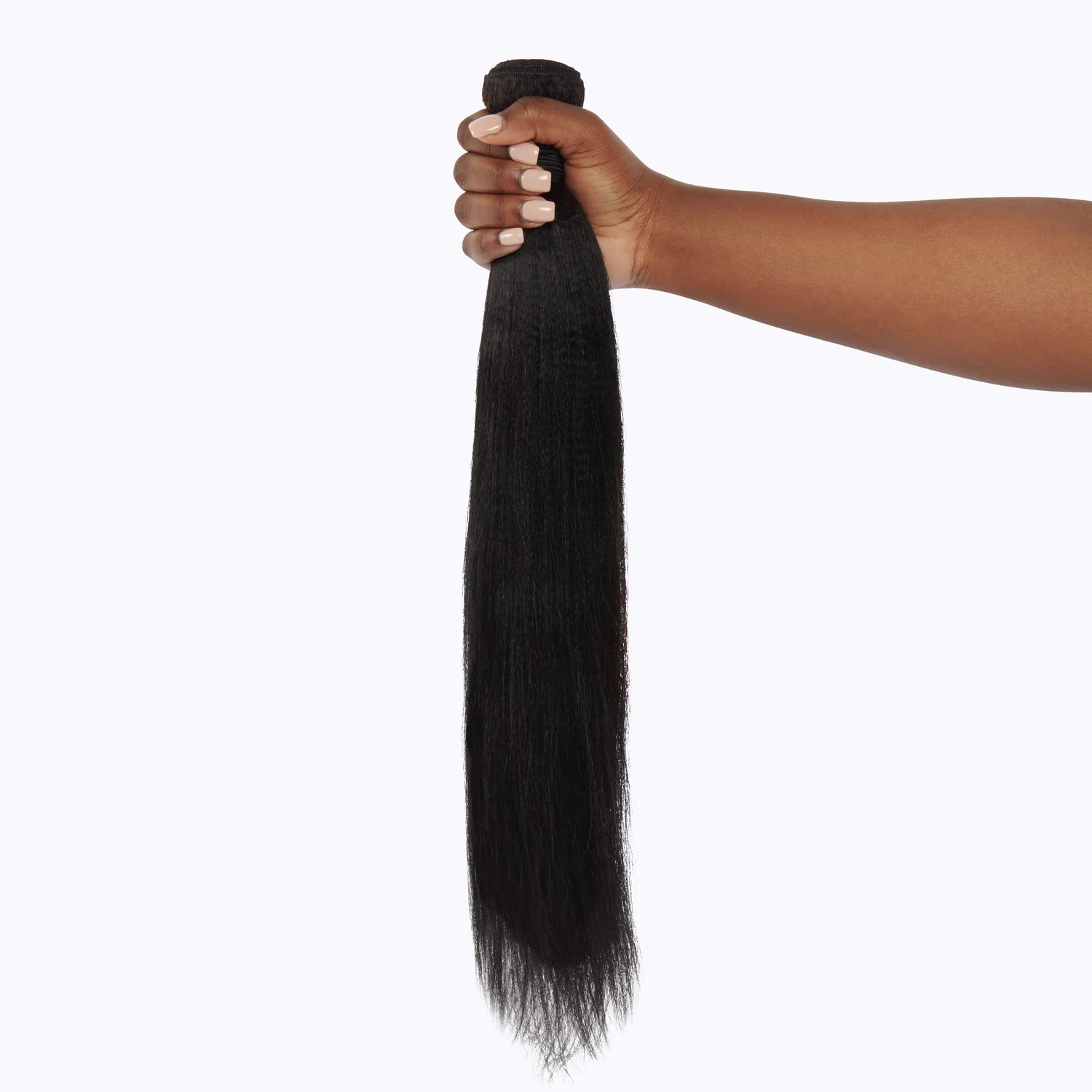
The cost of hair extensions can vary widely. Premium human hair extensions can range from ~ $200 to $2,500, depending on length and quality. Synthetic options are more affordable but often require frequent replacements due to wear and tear.
Based on our research, lab-grown hair seems to be priced in the mid-range, offering a balance between affordability and quality.
The simple answer is yes and no. Lab-Grown hair aims to bridge this gap by closely mimicking natural hair textures. Collagen infused hair is designed to provide a softer touch and more natural movement, enhancing the overall appearance. However, some users have reported that while the fibers closely resemble natural hair, they may not fully replicate the density or weight, which could affect how they blend with natural hair textures.
Stylist Charlotte Mensah notes that the success of such products will depend not just on how they look, but how they feel, emphasizing the importance of tactile experience in the adoption of lab-grown hair extensions.
Lab-grown and plant-based hair extensions represent a significant technological and ethical leap forward in an industry long criticized for environmental waste and questionable sourcing practices. The combination of cleaner chemistry, reduced plastic use, and scalp-safe design makes these new fibers an attractive option for health-conscious and eco-minded consumers.
As more data and third-party studies emerge, these innovations may well become the gold standard for safe, sustainable hair extensions. Until then, lab-grown and plant-based hair stand as both a symbol of progress and a work in progress, bridging science, ethics, and style in a way the beauty industry has never seen before.
The views expressed in this article are those of the author and do not necessarily reflect the opinions of MBHS. We may receive compensation for featured products, people, or services, which will be disclosed when applicable. MBHS and its contributors are not licensed hairstylists, barbers, or medical professionals—please consult a qualified professional or doctor before making decisions based on this content. Some material may be sourced from other websites and is credited accordingly. If you own the rights to any content displayed and wish to have it removed, please contact us.
Lab-engineered and plant-based hair extensions are rapidly emerging as the beauty industry’s next major innovation—promising to deliver realism, sustainability, and safety in a space long dominated by human and petroleum-based...
A new study suggests that chemical hair relaxers used to straighten hair may significantly increase the risk of developing multiple types of cancer—by as much as 166 percent in some...
Leave in conditioners are such a big part of my everyday natural hair life. They can take my wash day from good to great or the wrong one can take...

Lab-engineered and plant-based hair extensions are rapidly emerging as the beauty industry’s next major innovation—promising to deliver realism, sustainability, and safety in a space long dominated by human and petroleum-based synthetic hair. But the central question remains: does...
A new study suggests that chemical hair relaxers used to straighten hair may significantly increase the risk of developing multiple types of cancer—by as much as 166 percent in some cases.

Leave in conditioners are such a big part of my everyday natural hair life. They can take my wash day from good to great or the wrong one can take a good wash day to sheer madness. Outside...